Finding low cost online courses for students needing financial aid felt impossible when I was broke and desperate to keep learning. I remember staring at $400 course price tags thinking, “Who can actually afford this?” Turns out, a lot of platforms quietly offer deep discounts, fee waivers, and even free access if you know where to look. I spent the last two years testing these options with my own thin wallet, and some genuinely surprised me.
1. Coursera’s Financial Aid Program
Coursera is the first place I’d point anyone who needs quality education without the price tag. They partner with universities like Yale, Stanford, and the University of Michigan, so the course content is legitimately rigorous.
Here’s what most people miss: Coursera offers a built-in financial aid application on nearly every course. You answer a few short essay questions about your financial situation and learning goals, and within about 15 days, they usually approve you for 100% off. I’ve personally gotten approved three times. The essays don’t need to be perfect. Just be honest about why you can’t pay. That’s really all it takes.
2. edX and Its Audit Track Option
edX operates similarly to Coursera but with one key difference that I love. You can audit almost any course for free without even applying for aid. You won’t get a certificate, but you get the full course content, video lectures, readings, and sometimes even quizzes.
If you do want the verified certificate, edX also has a financial assistance program that covers 90% of the cost. I used this for a Harvard CS50 course and paid almost nothing. The application is simpler than Coursera’s, usually just a short paragraph explaining your situation. Approval came back in about a week for me.
3. Udemy’s Frequent Sales and Budget-Friendly Pricing
Udemy operates on a completely different model. Courses have listed prices that look steep, sometimes $80 or $100, but here’s the thing: Udemy runs sales constantly. I’m talking $9.99 to $14.99 for courses that would cost ten times that elsewhere.
My honest advice? Never buy a Udemy course at full price. Just wait a few days. A sale will come. I’ve bought courses on Python, Excel, and graphic design for under $12 each. The quality varies since anyone can create a course on Udemy, so always check reviews and completion rates before purchasing. Filter by 4.5 stars and above, and you’ll rarely be disappointed.
4. Khan Academy Is Still Completely Free
I know Khan Academy gets recommended a lot, and there’s a good reason for that. Everything on the platform is free. No hidden costs, no premium tiers, no certificates you need to pay for. It’s a nonprofit, and Sal Khan genuinely built it so anyone could learn.
The subjects lean heavily toward math, science, economics, and test prep like SAT and LSAT. If those are your areas, Khan Academy is unbeatable. I used it to brush up on statistics before taking a more advanced course elsewhere, and it honestly taught the material better than some paid options I’d tried. The practice exercises with instant feedback made concepts stick in a way passive video watching never does.
5. Google Career Certificates on Coursera
Google launched its own career certificate programs, and they specifically designed them for people without traditional degrees or big budgets. These certificates cover fields like Data Analytics, IT Support, UX Design, Project Management, and Cybersecurity.
Each program costs about $49 per month on Coursera, but here’s where it connects to financial aid: you can apply for Coursera’s financial aid on these Google certificates too. I watched a friend complete the entire Data Analytics certificate in under three months with full financial aid approval. She landed a job four months later making significantly more than her previous role. Google also considers these certificates equivalent to a four-year degree for their own hiring, which says something.

Low Cost Online Courses for Students Needing Financial Aid Through University Programs
Some of the best deals don’t come from third-party platforms at all. Many universities now offer their own free or reduced-cost online courses directly. MIT OpenCourseWare gives you access to virtually all of MIT’s course materials for free. No application, no enrollment, no cost.
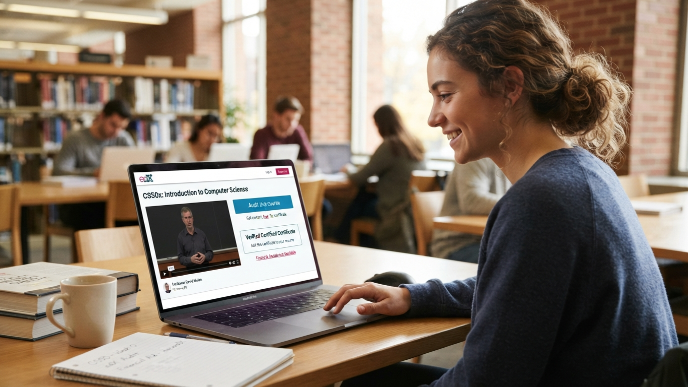
Stanford Online, Harvard Online Learning, and Yale Open Courses offer similar access. You won’t earn credit toward a degree in most cases, but the knowledge is identical to what paying students receive. I spent an entire summer working through MIT’s Introduction to Computer Science, and the depth of material was genuinely impressive. If your goal is learning the skill rather than collecting a credential, these university programs are gold.
6. Skillshare’s Free Trial and Scholarship Program
Skillshare focuses on creative skills like illustration, photography, writing, animation, and freelancing. They offer a free trial period, typically 7 days, that gives you unlimited access to their entire library.
What fewer people know is that Skillshare also runs a scholarship program for students who can’t afford the annual membership. The application process is straightforward, and they’ve been expanding access over the past couple of years. I used the free trial strategically, binge-watching an entire course on freelance writing in one week, and honestly got more actionable advice from that single course than from a semester-long college class I’d paid full tuition for.
7. Alison Offers Free Courses with Optional Paid Certificates
Alison is a platform most people haven’t heard of, which is a shame because everything on it is free to take. The catch is that certificates cost money, usually around $25 to $30. But the learning itself? Totally free.
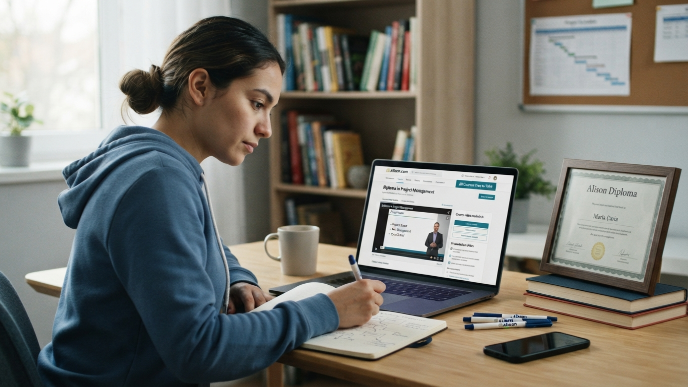
They cover a wide range, from IT and business to health and soft skills. The courses aren’t as polished as Coursera or edX in terms of production quality, but the content is solid and practical. I completed a diploma course in Project Management on Alison, and the material was thorough enough that I referenced my notes during actual work projects afterward. If you don’t need a fancy certificate to show an employer, Alison stretches your budget further than almost any other platform.
8. Community College Online Courses with FAFSA Coverage
This one gets overlooked constantly, and it shouldn’t. If you fill out the FAFSA and qualify for a Pell Grant, your local community college’s online courses could cost you literally nothing out of pocket. Many community colleges now offer fully online programs, and financial aid applies to them just like in-person classes.
I took two online courses through my local community college, both fully covered by my Pell Grant. The credits transferred to my four-year university. That’s real accredited coursework, real transferable credits, and zero cost. Check with your community college’s financial aid office. Many students don’t realize this option exists until someone tells them.
Tips for Getting the Most Out of These Low Cost Options
Having tried most of these platforms myself, I’ve learned a few things the hard way. First, set a schedule. Free and cheap courses have low completion rates because there’s no financial pressure to finish. Treat them like a class you paid thousands for.
Second, stack your learning. Take a free Khan Academy course as a foundation, then move to a paid Coursera certificate with financial aid for the credential. This approach gives you depth and proof of your skills without spending much. Third, always apply for financial aid even if you think you won’t qualify. The worst that happens is they say no, and in my experience, most platforms approve more applicants than they reject.
Frequently Asked Questions
How do I apply for financial aid on Coursera?
Go to any course page on Coursera and click “Financial aid available” below the enrollment button. You’ll fill out a short application with two brief essay responses about your financial situation and learning goals. Approval typically takes 10 to 15 days. Be genuine in your answers, they’re not looking for perfection, just honesty about why you need help.
Are free online courses actually worth taking?
Absolutely. I’ve taken free courses from MIT, Harvard, and Khan Academy that taught me more than some expensive classes I sat through in college. The value depends on the platform and the effort you put in. Free doesn’t mean low quality, especially when major universities are the ones providing the content.
Can low cost online courses for students needing financial aid lead to real jobs?
Yes, especially certificates from Google, IBM, and Meta offered through Coursera. Many employers now recognize these credentials during hiring. My friend landed a data analytics role after completing Google’s certificate program with full financial aid. Pair certificates with a strong portfolio or relevant projects, and you become a competitive candidate.
Do I need to prove my financial situation to get course discounts?
It depends on the platform. Coursera asks you to describe your situation in writing but doesn’t require tax documents or pay stubs. edX is similarly straightforward. Community colleges using FAFSA will verify income through standard federal aid processes. Most online platforms keep the barrier to applying intentionally low.
What’s the best platform overall for broke students?
If I had to pick just one, Coursera with financial aid gives you the best combination of quality, credential value, and affordability. You get university-level courses with verified certificates at no cost after approval. Khan Academy is the runner-up if you don’t need certificates and just want to learn solid foundational material.
Conclusion
Being broke shouldn’t lock you out of learning something that could change your career trajectory. These platforms gave me skills I use every single day, and most of them cost me less than a single college textbook. Which platform are you going to try first?